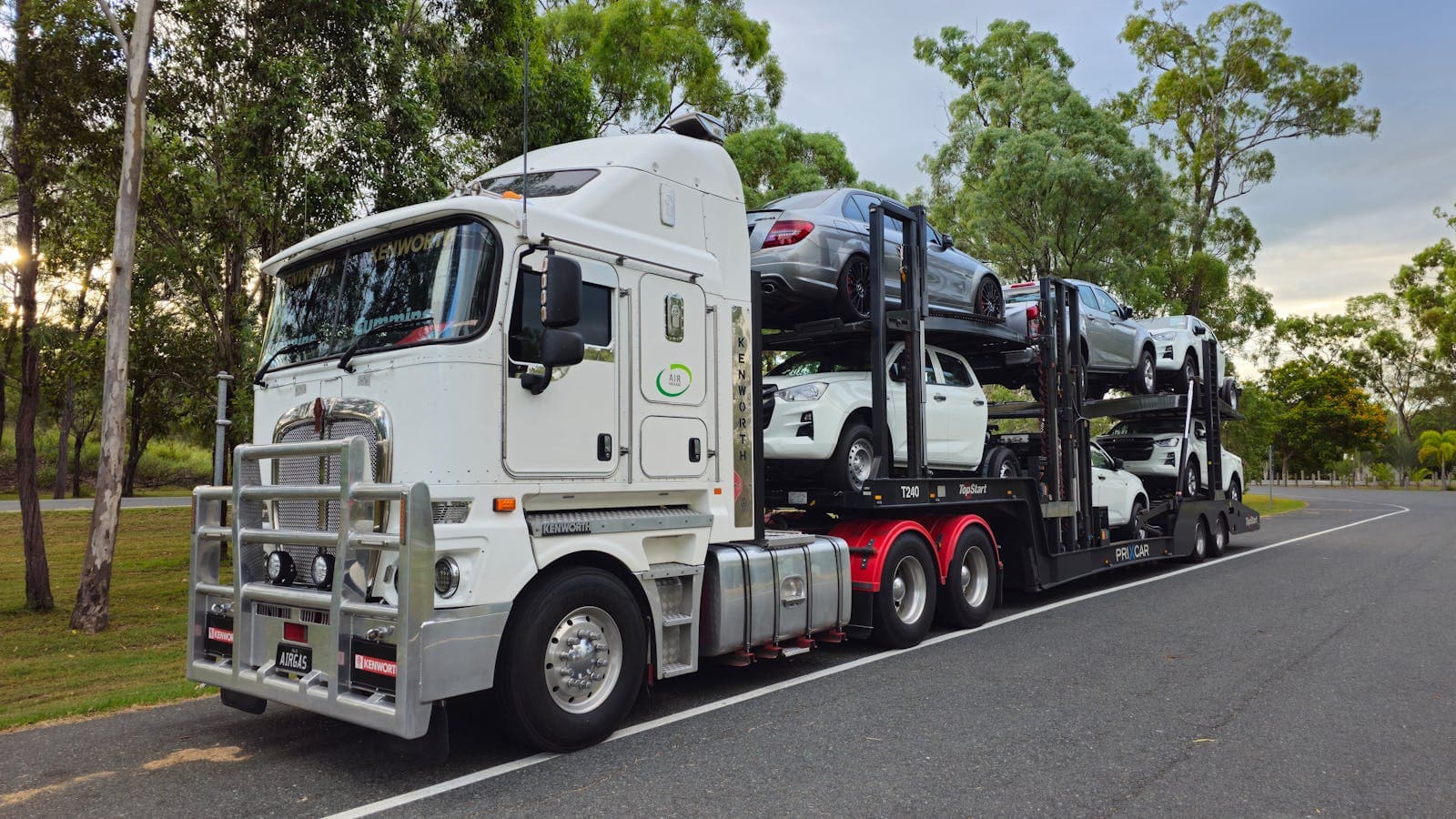
Most car shipping companies you see advertised online are brokers, not carriers. They do not own trucks. They arrange your shipment with a motor carrier and earn the difference between what you pay and what the carrier accepts. That is a legitimate model when it is run honestly, and it is the model GMF runs. The problem is that the same model lets bad actors quote a number that no real carrier will accept, then ask for more once your car is sitting waiting for a truck.
This guide is how I evaluate other brokers when I am asked, and what I tell customers to check before they book — with anyone, not just us. I run GMF Auto Transport (federally licensed broker, USDOT 4301133, MC-1675078). I also dispatch every load myself, so the pattern below is not theory.
Reviewed by
Kevin Miranda
Founder of GMF Auto Transport LLC, a federally licensed auto transport broker based in Wolcott, Connecticut.
The five tips, in one box
- 1.Verify the FMCSA registration before anything else.
- 2.Compare quotes by the lane logic, not by the lowest number.
- 3.Confirm no deposit until a carrier is assigned.
- 4.Ask how the broker vets carriers — by name, not adjective.
- 5.Read the contract for guaranteed dates, hidden fees, and BOL terms.
1. Verify the FMCSA registration before anything else
Every legitimate auto transport company in the US is registered with the Federal Motor Carrier Safety Administration. There are two registrations that matter: a Motor Carrier number (MC), which authorizes the company to operate as a broker or carrier, and a USDOT number, which is the federal identifier for safety records. Both should be on the company's site, in the email signature, and on any contract.
Look up the number yourself at safer.fmcsa.dot.gov. Search by company name or MC number. Three things to check on the result page:
- Authority status:Should read "Active." If it says "Inactive" or "Out of Service," the company cannot legally book your shipment.
- Operating type:"Broker" means they arrange transport with carriers (the model most online auto transport sites run). "Motor Carrier" means they own trucks. A few are both. Make sure you know which one you are dealing with.
- Years in operation:Not a deal-breaker either way. New brokers can be excellent. Long-time brokers can be terrible. But a company claiming to be "trusted by thousands since 2005" with an MC number issued in 2024 is lying about something.
GMF Auto Transport LLC is a federally licensed broker, MC-1675078, USDOT 4301133, founded August 2024. You can verify both numbers in the SAFER database in under a minute.
The trap to watch for: a company with no MC number, only a DOT number, advertising broker services. DOT alone is not authority to broker shipments. They are operating outside their registration, which means no FMCSA-supervised oversight if something goes wrong.
2. Compare quotes by lane logic, not the lowest number
This is the single biggest mistake customers make. The car shipping industry has a bait-and-switch problem, and the way it works is simple: a broker prices below carrier acceptance to win the booking, takes the deposit, then calls back days later to say "the carrier wants $300 more." Your car is sitting. You either pay or wait, and most customers pay.
A cheap-looking quote that no carrier accepts is not useful.
Lane prices come from the dispatch board, where carriers post available trucks and brokers post loads. The price clears at the rate carriers actually accept that week, given fuel cost, hours-of-service constraints, and how easily the lane refills on the way back. Honest brokers price within a band of that clearing rate. A quote $200 to $400 below the rest is a quote no carrier will move.
Here is what realistic open-transport ranges look like in 2026 for common lanes:
| Lane | Open transport range | Distance | Transit |
|---|---|---|---|
| New York → Florida | $700–$1,200 | 1,150–1,400 mi | 2–4 days |
| Connecticut → Florida | $725–$1,075 | 1,050–1,350 mi | 3–5 days |
| Texas → New York | $950–$1,350 | 1,550–1,850 mi | 4–6 days |
| California → Florida | $1,150–$1,650 | 2,500–2,900 mi | 6–9 days |
If three brokers quote $850, $880, and $920 for a CT-FL run and a fourth quotes $620, the fourth is the outlier and the problem. Take the middle quote, ask the broker to explain why the lane prices the way it does, and book with whoever answers in concrete terms.
Final price always depends on carrier availability, route, vehicle details, pickup timing, and market conditions. Exact pricing is confirmed before booking. Estimates are ranges by nature — anyone quoting an exact flat number weeks ahead is guessing.
3. Confirm no deposit until a carrier is assigned
Most brokered auto transport shipments use a deposit-plus-carrier-COD payment structure. You pay a small deposit (typically $200) to the broker once the carrier is confirmed and dispatched. You pay the balance directly to the carrier driver at delivery, in cash, certified funds, or by card if the carrier accepts cards. Everyone knows who collects what. If the carrier never picks up, you get your deposit back.
The trap: brokers who ask for full payment, or a large non-refundable deposit, before they have actually found a carrier. Two things go wrong from there. If the load is underpriced, the broker holds your money while shopping the lane at higher rates, calls back asking for more, and your only options are pay or fight for the refund. If the broker disappears or the company folds, you have no recourse against the carrier because there was no carrier.
Three concrete questions to ask any broker before you give them a card number:
- →"When is the deposit charged — at booking or at carrier assignment?" (Carrier assignment is the right answer.)
- →"What is your refund policy if no carrier accepts the load at this price?" (You should get the deposit back, full stop.)
- →"What is the balance due, and to whom?" (To the carrier driver at delivery, not to the broker after dispatch.)
GMF does not collect a deposit until your carrier is assigned and dispatched. If the load does not move, you do not pay.
4. Ask how the broker vets carriers — by name, not adjective
Every broker site says "vetted carriers" or "trusted network." Most do not specify what that means. The carrier you get matters more than the broker you hire, which makes carrier vetting the most important thing a broker actually does.
Four real vetting criteria to ask about:
Insurance verification
Carriers carry their own cargo insurance under FMCSA mandate. The broker should pull a current certificate of insurance for every assigned carrier and confirm the coverage limits before dispatch. Standard cargo policies cover $100,000 to $250,000 per shipment. For higher-value vehicles (typically $80K+), confirm the carrier policy will cover replacement value.
Authority and safety record
The carrier's MC and DOT numbers should be active. The FMCSA SAFER database also shows the carrier's out-of-service rate, crash record, and inspection history. A broker with a real vetting process pulls this before assigning a load.
Route fit
A carrier that runs Florida to New York every week is a better match for that lane than one based in Arizona who happens to be passing through. Route fit drives both transit time and pickup reliability.
Communication track record
The broker should know which carriers actually answer the phone during transit. Some drivers ghost between pickup and delivery, which leaves customers anxious and the broker unable to give updates. Brokers who dispatch loads regularly know who is reliable on this dimension and who is not.
Insurance is the carrier's, not the broker's. Verify it directly when the carrier is assigned. The broker should provide the carrier's name, MC number, and certificate of insurance before pickup. If they will not, that is information you are entitled to and they are hiding.
Read more about how we run vetting at /carrier-vetting-process.

The Bill of Lading and pickup inspection are where the real protection lives. Document the vehicle's condition before pickup and note anything new at delivery before signing.
5. Read the contract for guaranteed dates, hidden fees, and BOL terms
Every booking is a written agreement. Three things in the fine print decide whether you end up with a clean experience or a fight at delivery.
Guaranteed pickup or delivery dates
We do not guarantee pickup or delivery dates. No legitimate broker can. Carriers operate under federal hours-of-service rules, weather, route changes, and load consolidation that all affect timing. A broker who promises a specific delivery day is either charging a hidden expedited premium or planning to apologize after the fact. The honest framing is "estimated pickup window" (usually 1 to 5 days from booking on active lanes) and "most shipments deliver in X to Y days after pickup" (route-specific).
Hidden fees
Read the contract for any of these line items, all of which exist somewhere in the industry and most of which are not disclosed at the quote stage:
- ·Inoperable vehicle surcharge. If the car does not roll, drive, or steer, the carrier needs a winch and the price is higher (typically +$150). Disclose operability up front.
- ·Personal items charge. Many carriers allow limited personal items, often around 100 lbs, secured below the window line. The final allowance depends on the assigned carrier and must be confirmed before pickup. Heavier loads add fuel cost and can add $50 to $100.
- ·Cancellation fees. Some brokers charge a flat fee or retain the deposit if you cancel after dispatch. Confirm the timeline (cancel before carrier assignment is usually free).
- ·Storage / re-delivery. If you are not at the destination at delivery, the carrier may charge a storage day or a second-attempt delivery fee. Names and phones for the receiver should be on the BOL.
- ·Last-minute booking premiums. Less than 5 days from booking to pickup typically costs more because the lane has less time to refill. This is not a hidden fee, but it should be disclosed.
Bill of Lading and damage handling
The Bill of Lading (BOL) is the binding cargo contract signed at pickup and delivery. Two things to do at every shipment:
- At pickup: walk around the vehicle with the driver. Note any existing damage on the BOL. Take dated photos from all four sides plus a close-up of any pre-existing scratches or dents.
- At delivery: inspect again before signing. Note any new damage on the BOL beforeyou sign it. Once you sign a clean BOL, the cargo claim against the carrier's insurance is much harder to win.
If you spot new damage at delivery, write it on the BOL, take photos with timestamps, and call the broker the same day. The carrier carries the cargo insurance under FMCSA mandate, and the claim goes against their policy. The broker's job at this stage is to help you file the claim and follow up with the carrier.
A note on open vs. enclosed transport
Open transport is the standard. About 95% of vehicles ship this way, including every dealership delivery you see on the highway. Safe, fully insured, the cheapest option. Enclosed transport adds 40% to 60% to the open rate and is worth it for vehicles valued $80K+, classics, exotics, low-clearance sports cars, or new cars where any cosmetic risk matters. For a daily driver, open is the right call every time.
We cover this in more detail at enclosed auto transport. The short version: do not pay 40% to 60% extra unless your vehicle genuinely warrants it. Brokers who push enclosed on a daily driver are upselling.
Red flag checklist
Run any broker through this list before you book. One red flag is a hard pass.
- ×No MC or DOT number on the site or contract. Cannot verify authority.
- ×Quote $200 to $400 below the rest. Bait pricing.
- ×Full payment or large deposit before carrier assignment. No recourse if the load does not move.
- ×"Guaranteed pickup date" or "guaranteed delivery date." Cannot be promised. Either a hidden expedited fee or a coming apology.
- ×"Our trucks" or "our drivers" from a broker. Misrepresentation of the model.
- ×Pressure tactics ("this rate expires in 2 hours"). Sales script, not market reality. Lane prices move week to week, not hourly.
- ×Refusal to share the assigned carrier's name and DOT number after dispatch. You are entitled to know who is moving your car.
- ×No physical address or hard to reach by phone. Customer service after dispatch matters more than the sales pitch before.
How GMF runs the same checklist
GMF Auto Transport LLC is a federally licensed auto transport broker, not a motor carrier. We arrange transportation with licensed and insured motor carriers. Founded August 2024 in Wolcott, Connecticut. Kevin Miranda runs the dispatch board personally.
- — Federally licensed: MC-1675078, USDOT 4301133. Verify at safer.fmcsa.dot.gov.
- — No deposit until your carrier is assigned and dispatched.
- — Quotes priced to actual lane rates, not below carrier acceptance.
- — Carrier insurance, authority, route fit, and communication confirmed before dispatch.
- — No guaranteed dates. Real pickup windows and transit ranges.
- — Direct line to the dispatcher (me), not a call center.
Frequently Asked Questions
How do I verify a car shipping company is real?
Look up the company on the FMCSA SAFER database at safer.fmcsa.dot.gov. Search by the company name or by MC number. The result shows whether they are licensed as a broker, a motor carrier, or both, and whether their authority is active. GMF Auto Transport LLC is registered as a broker, MC-1675078 and USDOT 4301133. If a company has no MC number, no DOT number, or shows "out of service" authority, walk away. The FMCSA registration is the floor, not a quality signal, but its absence is a hard disqualifier.
What is the difference between a broker and a carrier?
A motor carrier owns trucks and employs drivers. A broker arranges the shipment with a carrier on your behalf. Most companies advertising car shipping online are brokers, including GMF. The carrier is the company whose insurance covers your vehicle in transit and whose driver signs the Bill of Lading. Brokers who say "our trucks" or "our drivers" are misrepresenting the model. The honest framing is "we arrange transport with a vetted network of motor carriers." The carrier you get matters more than the broker you hire, which is why broker carrier vetting is the real differentiator.
Why are some quotes so much lower than others?
Two reasons. The lane price changes week to week with fuel and carrier availability, so a low quote can simply be from a broker who priced last week. The other reason is bait-and-switch. Some brokers price below carrier acceptance to win the booking, then call back days later asking for $200 to $400 more once your car is sitting and no carrier will move it at the original price. If your $900 lane is quoted at $550, the math does not work and the broker knows it. Compare the middle quote across honest brokers, not the lowest one.
Should I pay a deposit before a carrier is assigned?
No. A reputable broker takes a small deposit (typically $200) only after the carrier is confirmed and dispatched. Most brokered shipments use a deposit-plus-carrier-COD structure, so everyone knows who collects what. If a broker asks for full payment or a large deposit before they have found a truck, the load may not be priced correctly, or you are funding a quote they cannot fulfill. GMF does not collect a deposit until your carrier is assigned.
Are guaranteed pickup or delivery dates a red flag?
Yes. No legitimate broker can guarantee a specific carrier date. Carriers operate under federal hours-of-service rules, route changes, weather, and load consolidation that all affect timing. Brokers who sell guaranteed dates are either charging a hidden expedited premium or planning to apologize later. Honest framing is "estimated pickup window" and "most shipments deliver in X to Y days after pickup." That is what we tell every customer, every time.
How do I tell if customer reviews are real?
Look for shipment-specific detail. Real reviews mention the lane (FL to NY, CA to TX), the vehicle, the timing, and the driver. Fake reviews are short, generic, and praise the company in marketing language ("five-star service," "highly recommend"). Read the negative reviews too. The pattern that matters is how the broker responded. A broker who admits the issue, names the carrier, and explains the resolution is more credible than one with all 5-star ratings and no public footprint. Cross-check on Trustpilot, BBB, and Google rather than relying on testimonials posted on the broker's own site.
Door-to-door or terminal-to-terminal?
Door-to-door is what most customers actually want and what GMF arranges by default. The carrier picks up at your origin address and delivers to your destination address, subject to the street being safe and accessible for a 75-foot car carrier. If your street is too narrow, has low-hanging branches, or has a weight-restricted bridge, the driver coordinates a nearby meeting point (a parking lot, wide cross street). Terminal-to-terminal is rare in retail auto transport now and usually only worth it for fleet shipments. Do not pay extra for "door-to-door" as if it is an upgrade. It is the standard.
What should the contract include before I book?
Five things in writing: the lane (origin city and destination city), the vehicle (year, make, model, condition flags), the transport type (open or enclosed), the pickup window (a date range, not a specific day), and the price with deposit terms. The contract should also name GMF as the broker and disclose that the carrier carries the cargo insurance, not the broker. If the document does not name the broker, does not show MC or DOT numbers, or quotes a flat all-inclusive price with no breakdown, do not sign.
Ready to get a quote that matches the lane?
Free quote in under 60 seconds. No deposit until your carrier is assigned. Honest range, with the lane logic explained if you ask.
Call or text: (203) 312-1197
Online quote: gmfautotransport.com/get-quote
Email: info@gmfautotransport.com
GMF Auto Transport LLC · USDOT 4301133 · MC-1675078 · Federally licensed broker